Two minutes. No shortcuts.
Every patty hits the flat-top at 450°F. We press it once, hard, and let it form that lacy, crispy edge. Everything else — the bun, the fries, the sauce — comes from a process we've been tweaking since 2019.
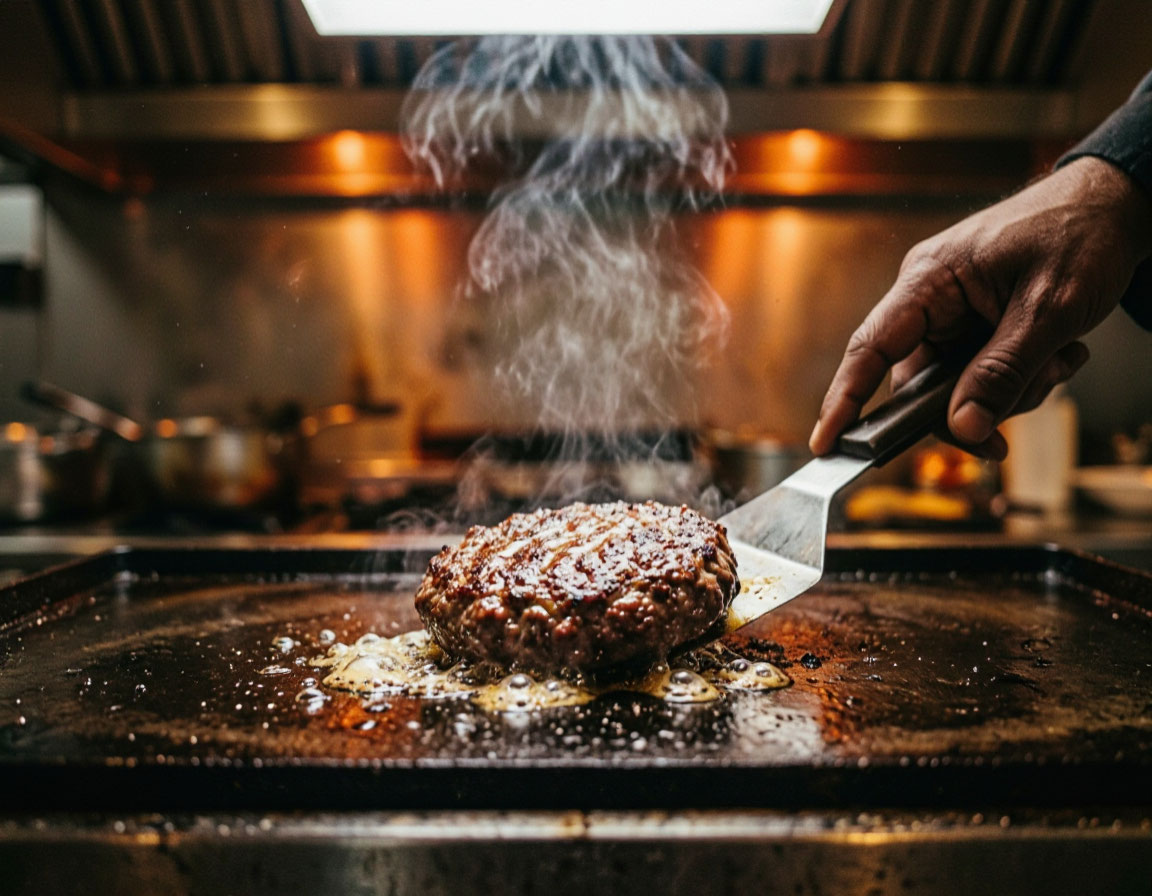
The patty.
We start with two ounces of fresh-ground beef — chuck and brisket, roughly a 70/30 lean-to-fat ratio, ground twice a week from a Kansas ranch. Never frozen. The fat is what gives a smash burger its crust: when the patty hits the flat-top, that fat renders out and fries the edges.
The patty goes down at 450°F. We use a heavy cast-iron press and press once, hard, for about four seconds. Not twice. A second press squeezes out the juice and gives you a hockey puck. One press, then walk away. Sixty seconds on the first side, flip, thirty on the second.
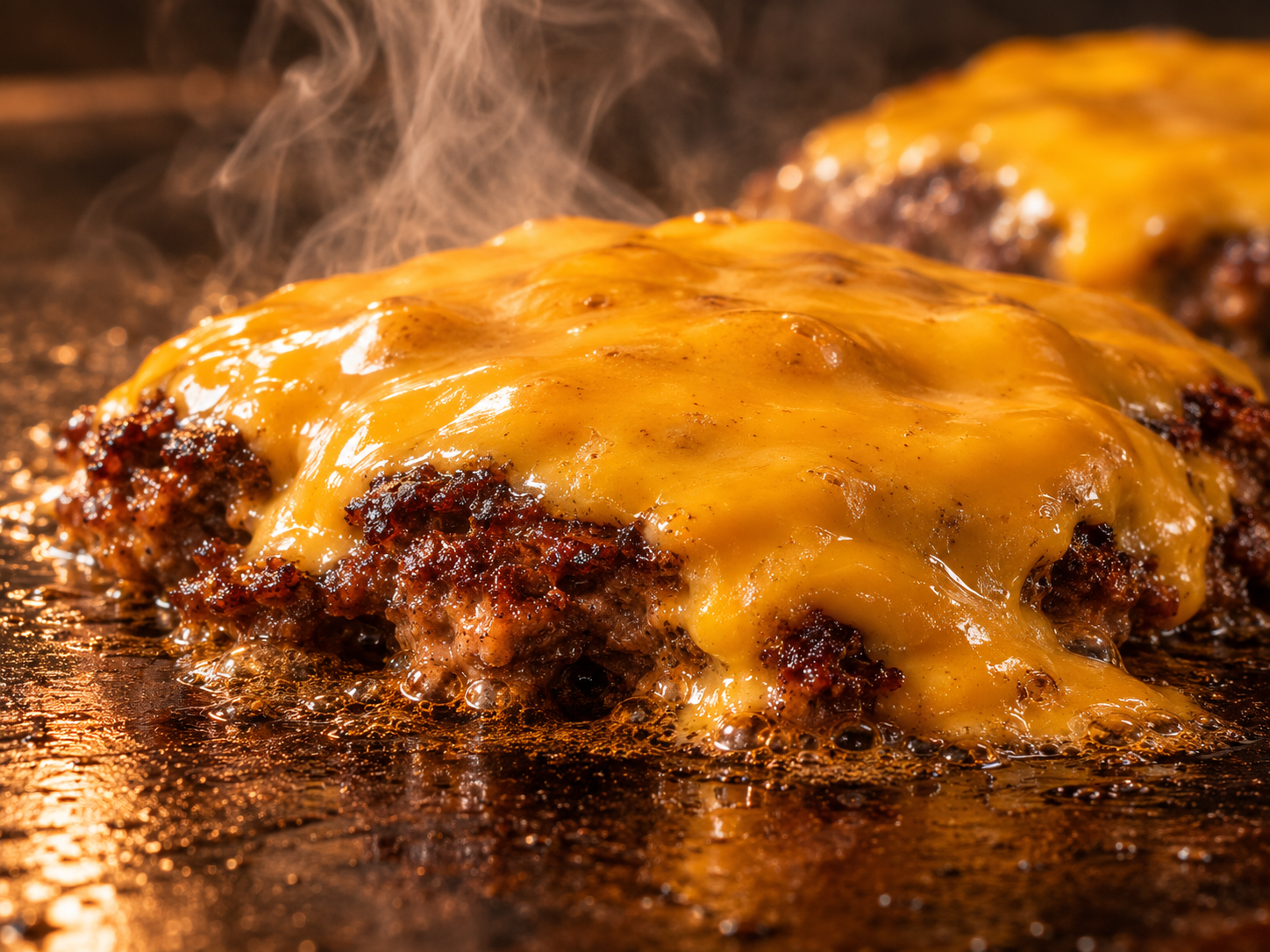
The cheese.
American cheese, one slice per patty, laid on during the flip. It's not a fancy cheese — that's the point. It melts fast and drapes over the edges of the patty, which is exactly what you want in the thirty seconds it has to melt. Swiss or cheddar would be a stronger flavor; American is the right texture.
We cover the patty with a steel dome for the last fifteen seconds. That traps the steam and melts the cheese fully without overcooking the beef. When the dome comes off, the cheese should be dripping over one edge and just starting to blister on the other.
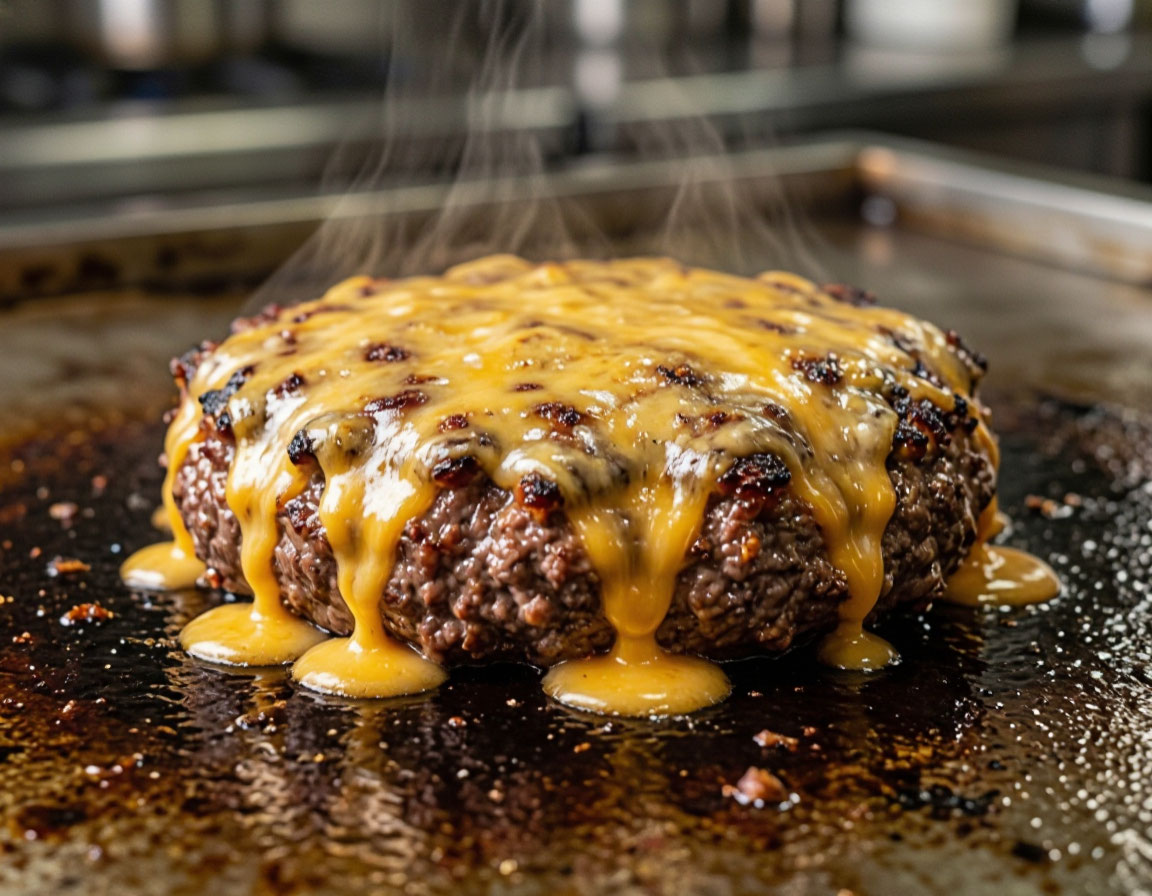
The bun.
Sesame bun from a bakery two blocks over. Delivered warm at 9:45 every morning. We split it, butter both cut faces, and toast it face-down on the flat-top for about twenty seconds — just enough to give it a crisp crust without drying out the crumb.
The bottom bun gets Buster sauce first. Then pickles, then the patty. Top bun gets nothing. It doesn't need it.
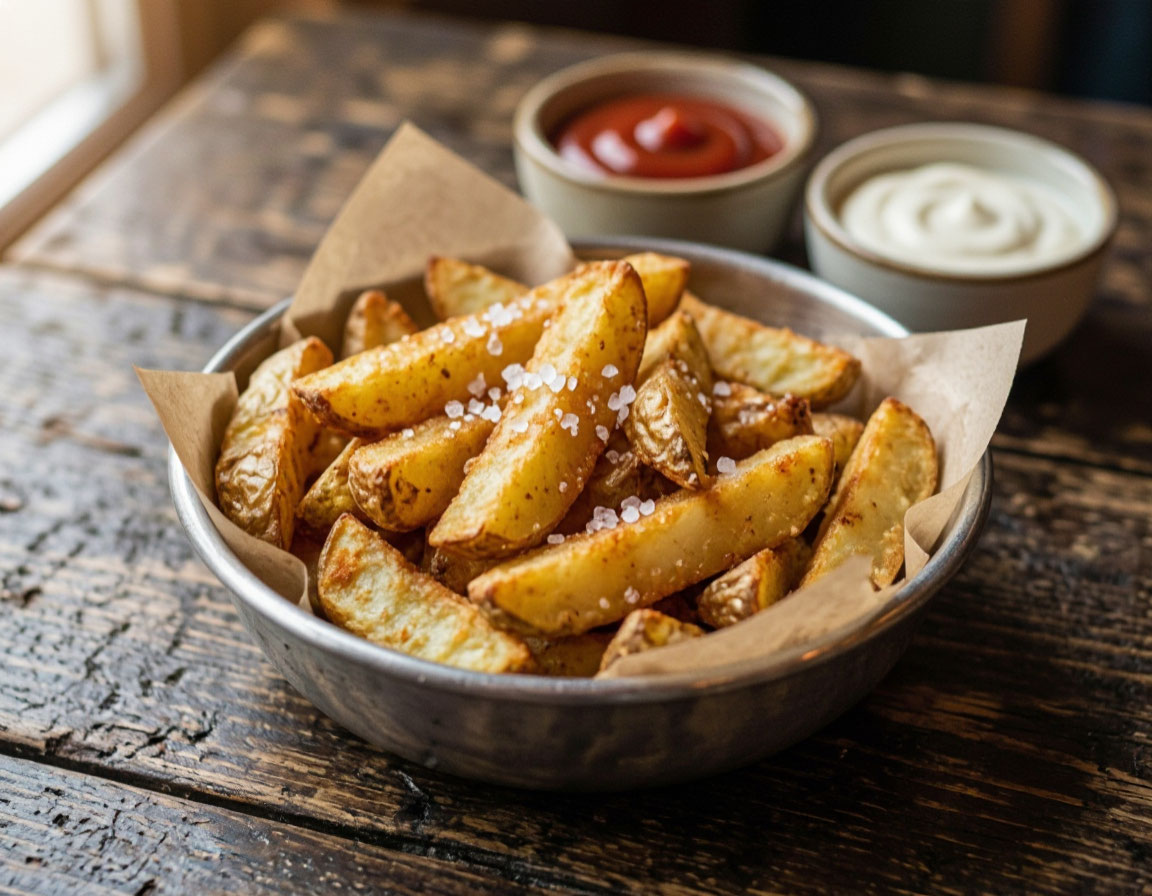
The fries.
Russet potatoes, cut at 9am every morning on a mandoline, then soaked in cold water for thirty minutes to pull out excess starch. That soak is why our fries stay crisp — the starch would otherwise burn before the inside cooks.
Double-fried. First fry at 325°F for four minutes to cook the inside; that's the "blanch." They rest for at least twenty minutes. Second fry at 375°F for two minutes right before serving — that's the crust. Salt immediately, out of the fryer, so the salt sticks. Served in a paper-lined basket within ninety seconds.
The sauce.
Mayonnaise, ketchup, yellow mustard, pickle brine, a pinch of cayenne, a pinch of smoked paprika, and a dash of Worcestershire. That's the whole recipe. Every cook in the kitchen has been told the proportions; two of them have argued about them for six years.
We make it in-house, in small batches, twice a day. It sits for at least an hour before it's used so the flavors come together. It's the last thing that goes on before the top bun.
The full minute-by-minute
0:00
Ball of beef on the flat-top at 450°F. Press once with heavy iron, hard, four seconds. Walk away.
1:00
Flip. Cheese on. Dome down. Set a timer for 30 seconds.
1:30
Dome up. Cheese melted. Slide patty onto bottom bun with pickles and sauce.
1:45
Top bun on. Wrap in paper. Hand to the window. Total elapsed time from order: 2 minutes, give or take.
"A burger is either great in the first ninety seconds or it's not great at all. We only care about the first ninety seconds."
— Buster, owner & head cook
What we don't do
- No frozen beef. Ground twice a week in Kansas, delivered to the kitchen at 6am the day it's cooked.
- No delivery. A burger that spent 15 minutes in a car is a different burger. Pickup only — always.
- No second press. You press a smash patty once or you don't press it at all.
- No microwaves. Nothing on our menu is reheated.
- No third-party apps. Our order system is our own. Fewer hands between the grill and your window.
- No dinner service. We cook three hours a day because that's how long the food stays best.
Now see it for yourself.
The best way to understand how we cook is to eat one. Order pickup — we'll have it hot at the window.